By Anthony Nwachukwu
The disbursement of the $700 million Cabotage Vessel Financing Fund (CVFF) will remain a mirage so long as the Primary Lending Institutions (PLIs) are required to bear the entire credit risk on loans to shipowners, for which they contribute only 35 per cent of the financing and over which beneficiaries they have limited control to select.
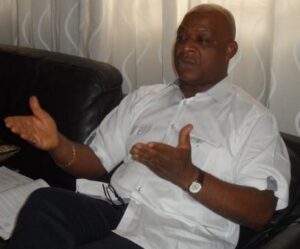
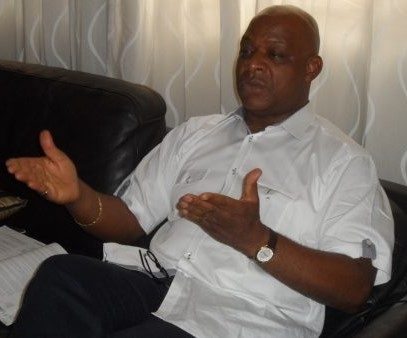
This submission was made on Thursday in Lagos by Temisan Omatseye, a former Director-General of the Nigerian Maritime Administration and Safety Agency (NIMASA), at the 2026 Annual Summit of the Shipping Correspondents Association of Nigeria (SCAN), themed “Low-Risk Capital for Indigenous Shipowners: Overcoming Regulatory and Financial Bottlenecks.”
Established under the Coastal and Inland Shipping (Cabotage) Act of 2003, the CVFF was designed to provide financial support for Nigerian shipowners to acquire vessels and strengthen indigenous participation in the country’s shipping industry.
Omatseye disclosed that the original four PLIs were to serve as custodians of the fund, with 50 per cent of the loan to come from the CVFF, 35 per cent from the participating bank, and the remaining 15 per cent as the shipowner’s equity contribution.
However, with the banks expected to take full responsibility for any loan default, even after being restricted in assessing and selecting borrowers, he noted this arrangement failed to reflect the realities of banking operations and risk management.
Admitting he would have done things differently with the knowledge he has now, Omatseye said the CVFF guidelines are functionally bad and contradict the Banks and Other Financial Institutions Act (BOFIA) 2020, which gives banks responsibility for risk assessment on lending transactions.
Therefore, no bank will reasonably contribute 35 per cent equity, get barred from lending risk assessment, and then accept 100 per cent of transaction risk, he argued, adding that even the banks had raised concerns about taking full responsibility for loan defaults on transactions over which they have no independent assessment of the prospective borrowers’ creditworthiness.
Consequently, “the banks told me that this is the problem we are having,” he said, adding: “It is better to step outside your CVFF, do my own risk assessment on BOFIA, then lend the money, and leave your money as fixed deposits and then collect interest rates.”
Earlier, SCAN President, Moses Ebosele, said indigenous shipping remained central to Nigeria’s economic growth, employment generation, technology transfer and foreign exchange earnings, but has continued to face obstacles that limit its competitiveness against foreign operators.
Ebosele identified high borrowing costs, stringent lending conditions, multiple charges, administrative delays, policy inconsistency, inadequate ship-repair and dry-docking infrastructure, limited cargo access, maritime insecurity and a shortage of skilled seafarers as major constraints confronting indigenous operators.
“Ship acquisition requires substantial capital investment, while the high cost of borrowing and stringent lending conditions make it difficult for many Nigerian operators to acquire vessels or expand their fleets,” he stated.
Against this background, SCAN urged the federal government, development finance institutions, commercial banks and other financial partners to create accessible, long-term funding arrangements that reflect shipping’s capital-intensive nature.
The SCAN president also called for effective management of the CVFF, simplification of regulatory procedures, harmonisation of charges, stronger enforcement of local-content policies and strategic partnerships between Nigerian operators and international shipping companies.
Furthermore, Ebosele said “indigenous shipping must be recognised as a strategic national economic asset rather than merely a private commercial undertaking.”