- By Anthony Nwachukwu
Nigeria and the United Arab Emirates (UAE) are moving their relationship from diplomatic warmth to concrete delivery, with billions of dollars already committed to identifiable infrastructure, banking and energy projects across the country.
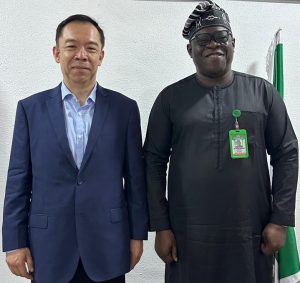
The latest signal came when Minister of State for Foreign Affairs, Ambassador Sola Enikanolaiye, received UAE Ambassador Salem Alshamsi at the Ministry of Foreign Affairs in Abuja, where both sides reviewed progress across trade, investment, aviation and technology.
Improved trade relationship
The numbers behind the meeting are striking. Bilateral trade between the two countries grew from $1.45 billion in 2019 to $4.8 billion in 2025 — a trajectory that outpaces most of Nigeria’s bilateral relationships. More precisely, non-oil trade reached $4.3 billion in 2024, a 55 per cent year-on-year increase, before climbing to $5 billion in 2025, reflecting expanding commercial activities, stronger diplomatic engagement and growing investor confidence between the two nations. Ambassador Alshamsi projected the figure could reach approximately $8 billion by 2027.
Comprehensive Economic Partnership Agreement (CEPA)
Nigeria and the UAE formally signed a Comprehensive Economic Partnership Agreement on January 13, 2026, with Presidents Bola Tinubu and Mohamed bin Zayed Al Nahyan presiding at Abu Dhabi Sustainability Week. Under the agreement, tariffs are eliminated on more than 7,000 Nigerian products entering the UAE and over 6,000 Emirati products entering Nigeria, while service sectors and business establishment opportunities in both countries are opened up.
Under CEPA, Nigeria eliminated tariffs on 6,243 UAE products, while the UAE removed tariffs on 7,315 Nigerian products. The UAE has ratified the agreement. Ambassador Alshamsi pressed for Nigeria to complete its own domestic ratification, warning that full implementation would unlock the next wave of investment. Minister Enikanolaiye pledged to expedite the process and called for the early convening of the Nigeria-UAE Joint Commission to clear outstanding operational hurdles.
The most consequential projects already on the ground
Beyond the trade figures and diplomatic communiqués, the UAE’s footprint in Nigeria is most visible in a set of large, identifiable projects.
The most consequential is the Lagos–Calabar Coastal Highway, Nigeria’s most ambitious road project in decades, which has become the centre-piece of Emirati-backed infrastructure financing.
 On December 19, 2025, Nigeria signed $1.126 billion in financing for Phase 1, Section 2 of the highway — a 55.7-kilometre stretch connecting Eleko in Lekki to Ode-Omi — fully underwritten by First Abu Dhabi Bank and Afreximbank, representing ICIEC’s largest-ever supported transaction.
This followed a $747 million syndicated loan for Phase 1, Section 1 — a 47.47-kilometre stretch from Victoria Island to Eleko — in which First Abu Dhabi Bank served as Agent and Intercreditor Agent alongside Deutsche Bank, Afreximbank, Abu Dhabi Exports Office (ADEX) and others. Construction on that first section is already over 70 per cent complete. Combined, the UAE-anchored financing across both phases totals approximately $1.87 billion — one of the single largest pieces of foreign-backed infrastructure financing in Nigeria’s history.
In Abuja, the Centenary City project — a master-planned, mixed-use smart-city development conceived as a joint venture between Front Range Developers of the UAE and Centenary City Plc, with a total estimated cost of $18.5 billion — is showing fresh signs of life. In August 2025, Julius Berger was formally engaged to execute Phase 1 primary infrastructure works, including a 4.3-kilometre plot access road and internal infrastructure for three residential districts: The Grove Residences, Safari Park Residences, and Ridge Villas.
On the banking front, First Abu Dhabi Bank — the UAE’s largest lender — is preparing to open a representative office in Lagos, which would make Nigeria its 22nd country of operation, adding to its footprint across the Middle East, Europe, Asia and North Africa.

In the energy sector, a new commercial thread has emerged. The Dangote Petroleum Refinery purchased two cargoes totalling about 2 million barrels from Abu Dhabi National Oil Company (ADNOC) in June 2026, including Umm Lulu crude and a blend of Das Blend and Murban grades — the first time the refinery has sourced crude from the Middle East. The development marks a strategic pivot, as the 700,000-barrel-per-day facility diversifies its feedstock sources amid continued constraints in Nigeria’s domestic crude supply.

Aviation: closing the gap on Abuja connectivity
After a period of tensions that saw the UAE suspend visa issuance for Nigerian nationals and Emirates halt flights to Nigeria amid disputes over trapped airline revenues and regulatory concerns, relations between the two countries are entering a more stable phase, with Emirates flights to Abuja in the process of resuming. Discussions at the Abuja meeting also covered the proposed commencement of Emirates Airline operations in Abuja, with ongoing consultations with relevant Nigerian authorities underway. Separately, Etihad Airways has announced plans to resume daily services to Lagos from March 2027, with the UAE Ambassador pushing the airline to also commence Abuja operations.
Technology, youth and people-to-people ties
Both sides acknowledged the growing potential for collaboration in artificial intelligence, digital technology and fintech. Nigeria pressed for knowledge transfer, skills development and capacity-building programmes for young Nigerians. On movement between the two countries, Ambassador Alshamsi confirmed that there are no longer visa rejections for Nigerian nationals travelling to the UAE, with no fewer than 15,000 Nigerians having made the trip in the last year alone.
Both sides expressed confidence that the combination of CEPA implementation, ongoing infrastructure delivery and deeper institutional engagement would convert the cordial Nigeria-UAE relationship into measurable economic gains for citizens of both countries.
Sources: Nigerian Ministry of Foreign Affairs; State House Abuja; First Abu Dhabi Bank; S&P Global Commodity Insights; Forbes Africa; AGBI;